China’s April Factory Growth Beats Forecasts, but Momentum Is Cooling
China’s April Factory Growth Beats Forecasts, but Momentum Is Cooling
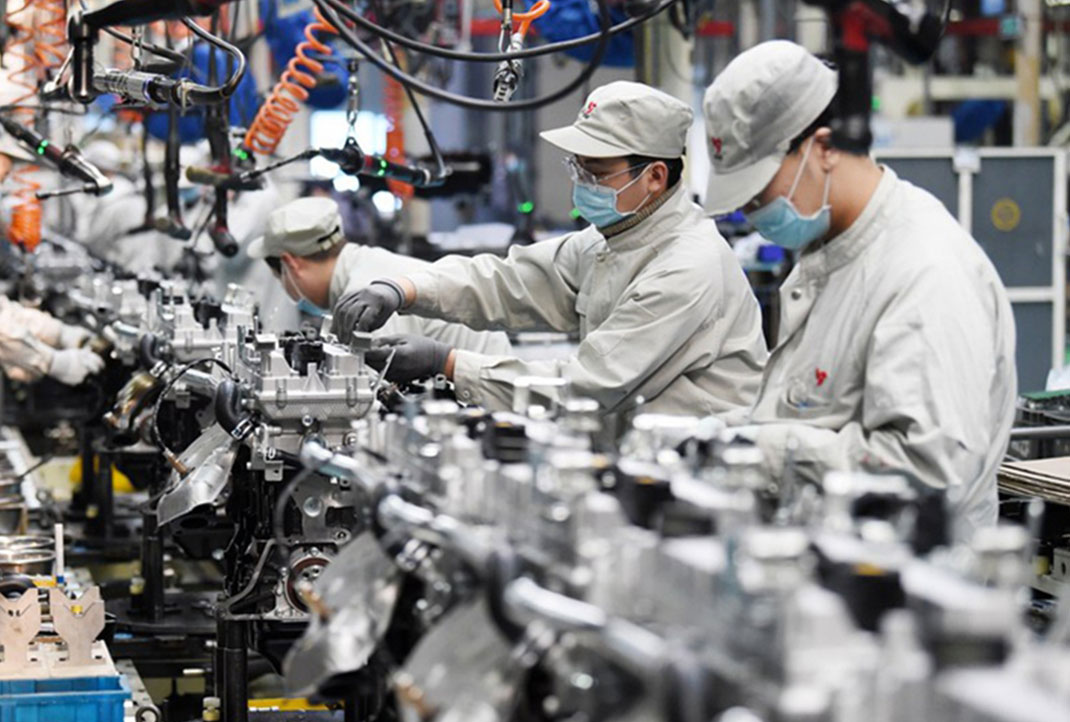
China’s factory sector stayed in expansion in April and slightly beat expectations, but the broader message was more mixed than the headline suggested. Manufacturing activity remained above the 50 mark, yet growth slowed from March’s one-year high, new orders softened, and the services side of the economy slipped back into contraction.
The official manufacturing purchasing managers’ index came in at 50.3 in April, above the expected 50.1. A reading above 50 signals expansion. While that was a modest positive surprise, it still marked a step down from the previous month, showing that factory activity is continuing to grow, but with less momentum.
The underlying details were softer. The new orders sub-index fell to 50.6 from 51.6 in March, indicating that demand is still expanding, though at a slower pace. At the same time, the non-manufacturing PMI dropped to 49.4 from 50.1, with both services and construction weakening. The composite PMI also edged lower, pointing to an economy that is still moving forward, but with less even support across sectors.
Manufacturing is still the stronger pillar
China’s industrial side continues to look firmer than its domestic-facing economy. Output and new orders both remained in expansion territory, suggesting factories are still benefiting from export demand, inventory rebuilding, and relatively solid activity in selected industrial segments.
That resilience matters because markets have been watching for signs that higher energy costs, geopolitical uncertainty, or weaker global demand could begin to weigh more heavily on production. So far, manufacturing appears to be holding up better than many had feared.
One notable detail in the April survey was export demand. The new export orders index moved above 50 for the first time in two years, suggesting external demand may be stabilizing more than expected, at least for now. That does not remove the risk of weaker global growth later in the year, but it does suggest Chinese exporters entered the second quarter in better shape than many had assumed.
Domestic demand still looks less convincing
If manufacturing is holding up, domestic demand remains the softer part of the picture. The drop in the non-manufacturing PMI back below 50 is a reminder that services and construction are not providing the same support.
That matters for policy. Chinese officials have spent months emphasizing the need to strengthen internal demand and consumption, partly because growth that relies too heavily on industry and exports is less balanced and more exposed to external shocks. April’s data reinforces that concern. The economy is not showing signs of a sharp slowdown, but the composition of growth still leaves policymakers with reason to stay focused on household demand and service-sector confidence.
The moderation in new orders points in the same direction. Manufacturing is still expanding, but the pace has cooled enough to suggest the sector is no longer accelerating in a straight line. So while the headline PMI beat forecasts, the broader signal was more cautious.
The private survey was stronger
A separate private manufacturing survey released around the same time painted a more upbeat picture, posting its strongest reading in several years. That survey pointed to solid demand, improved operations, and support from new product launches.
The gap between the official and private readings is not unusual. They often capture different parts of the economy. The official survey tends to reflect larger and more state-linked firms, while private surveys can be more sensitive to smaller and export-oriented manufacturers. Together, the two sets of data suggest that manufacturing remains in decent shape, even if the official figures show some cooling from March.
Input costs remain a risk
One area that deserves close attention is prices. Input costs remain elevated, with oil markets still sensitive to tensions in the Middle East. That creates a more difficult backdrop for manufacturers, especially if higher energy costs begin to feed through more directly into transport, chemicals, and other industrial inputs.
So far, the factory sector has not been derailed by those pressures. But higher input prices can become more problematic if demand cools at the same time. In that environment, firms may find it harder to protect margins even if output stays relatively stable.
That is why April’s data should be read as resilient rather than outright strong. China’s factory sector is still expanding, but it is doing so amid rising cost pressures and weaker domestic demand.
What the April reading really shows
China’s April PMI report does not point to a sharp downturn, but it does show an economy losing some of the stronger momentum seen in March. Manufacturing remains in expansion, and export orders have improved, both of which are constructive signs. At the same time, softer new orders, weaker services, and rising cost pressures suggest that growth remains uneven.
The clearest takeaway is that industry remains the stronger part of the economy, while domestic demand still needs support. Whether factory resilience can continue through the next few months may depend on whether export demand stays firm and whether energy-related cost pressures begin to bite more forcefully.
