Airbus Sets 2026 Delivery Goal Below Forecasts as Boeing Shows Signs of Momentum
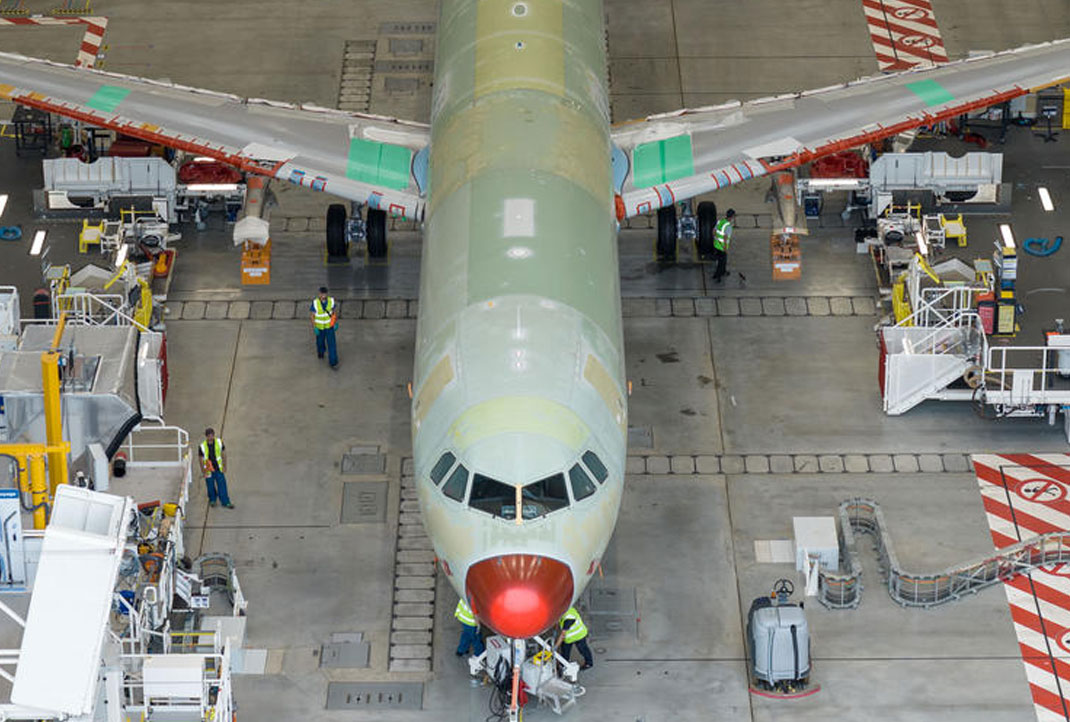
Airbus Sets 2026 Delivery Goal Below Forecasts as Boeing Shows Signs of Momentum
Airbus says it expects to deliver 870 commercial aircraft in 2026, a target slightly below analysts' expectations and signaling that the company is approaching the year with more caution than the market had assumed.
The guidance comes at a time when investor sentiment toward Airbus has softened. Some analysts say the shift reflects a mix of factors: Airbus is still working through recent production and supplier issues, while Boeing appears to be stabilizing after a long run of operational problems that previously allowed Airbus to pull further ahead.
A cautious target after a disrupted year
Airbus delivered 793 aircraft in 2025, narrowly beating a revised goal of 790. That revised target had already been lowered from an earlier ambition of 820, after supplier quality problems linked to fuselage panels disrupted deliveries, particularly for the high-volume A320 family. Several analysts have framed those issues as an execution setback rather than a structural break in Airbus's longer-term production ramp, but the disruption has still influenced expectations for near-term output.
Because aircraft makers collect most of an airplane's payment when it is handed over to the customer, deliveries are one of the most important numbers in the sector. Guidance that falls below consensus can quickly reshape market expectations, even if demand remains strong.
Boeing is narrowing the narrative gap
Airbus has benefited in recent years from Boeing's prolonged crisis, especially regarding production quality and reliability of the 737 Max, Boeing's most important narrowbody program. But the competitive picture is starting to look less one-sided.
Airbus delivered 193 more planes than Boeing in 2025, yet Boeing won more orders over the year, its first time doing so since 2018. That shift, combined with Airbus' own quality constraints, is feeding a narrative that Boeing may be regaining traction under CEO Kelly Ortberg, who took over in 2024.
Boeing's tone has also become more confident about production ramp prospects, supported by stronger-than-expected revenue performance in its most recent quarterly results.
Backlogs remain huge, but near-term execution matters
Both Airbus and Boeing are operating with elevated backlogs, reflecting years of supply-chain strain that began during the Covid era and have taken longer than expected to normalize.
Early 2026 data has also highlighted how noisy, but attention-grabbing, the month-to-month comparisons can be. In January 2026, Boeing reported 46 deliveries and 103 net orders, while Airbus reported 19 deliveries and 49 net orders. Airbus deliveries are typically lighter early in the year, but some analysts still saw the January figure as notably weak versus the same month a year earlier.
At the same time, analysts cautioned against over-reading January. The more important implication may be timing: if Airbus begins the year slowly, it may again rely on a back-end-loaded delivery profile, with a heavier concentration of handovers later in the year.
The takeaway
Airbus is still the global leader in commercial aircraft deliveries, and demand remains supported by massive backlogs. But its 2026 delivery target signals caution, and the market is increasingly watching whether Airbus can execute cleanly while Boeing's competitive position appears to be improving.
